How was India?

Last February (2008) I went to India for a whole month with nothing but a little backpack.

Since returning, everyone has asked the same three-word question : “How was India?

Impossible to sum up in a few sentences, so my smart-ass answer has been “scrappy”.

Here I’ll try to explain my real thoughts about India (so far).


This was my first visit to India, and I’m going to return many times, so this time I went only to meet with some companies, in the cities of Bangalore, Hyderabad, and Kolkata. No tourist sights or countryside. Just meetings and cities. So of course I saw India from a business and urban point of view. Everything I say, below, is just my observation from visiting these 3 cities.

Rubble and Garbage

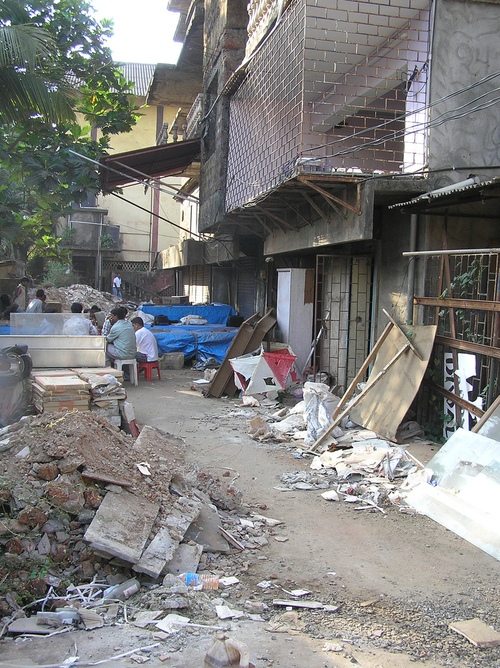
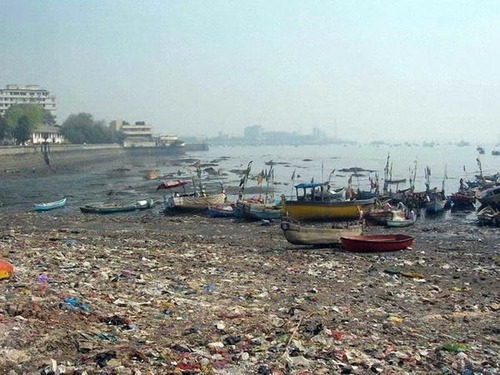
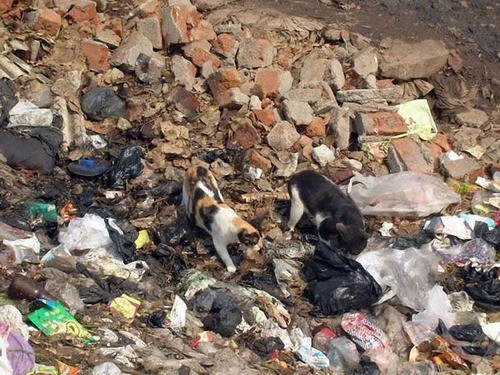
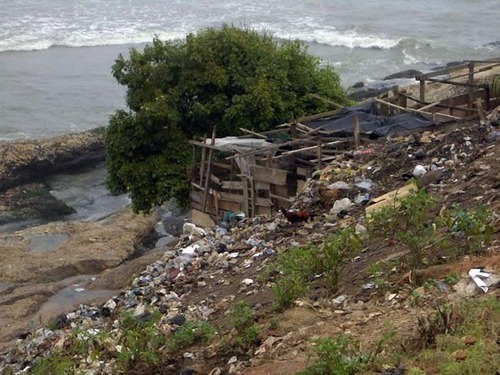
In India, there is rubble and garbage everywhere.

  • walk over rubble on every sidewalk
  • walk around rubble to enter an office building
  • walk past huge piles of garbage on nice residential streets
  • even bigger piles of rubble between every building
  • and garbage lines everything, almost everywhere

Rubble right in front of stores:
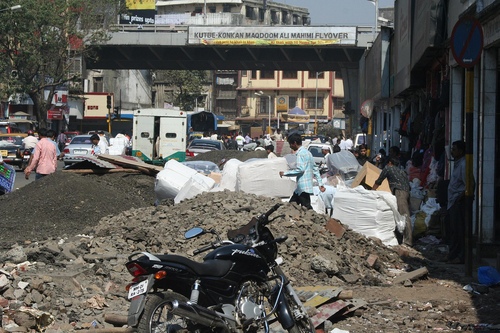

Rubble in front of multi-million-dollar buildings:
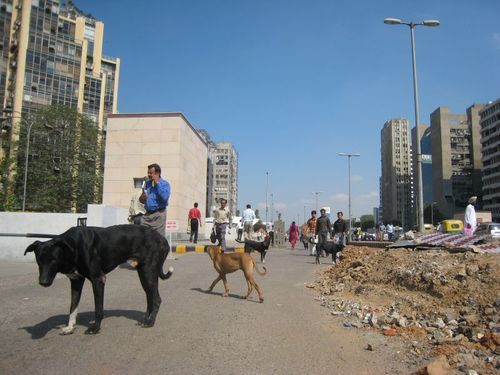

Rubble in every available space:

I found myself thinking, “They’re so often announcing how many billions of people are here. I see hundreds just standing around right now. Couldn’t someone just pick up that rubble/garbage and be done in a couple hours?”. Then it reminded me of British teeth….

In England, I asked a good friend who grew up there why the Brits have a reputation for bad teeth. She said, “Really? We do? From our point of view, we wonder why Americans are so fanatic about having unreasonably perfect teeth.”

Aha! Just as the casual dresser might look at the ultra-primped over-perfect hours-to-get-ready type and think, “What a freak!” - maybe all the rubble and garbage is just the norm to someone growing up in India. It’s not a problem to be solved any more than my wrinkled t-shirt and day-old jeans are a clothing problem I should solve.

Someone posted these photos on their blog, intending to show how disgusting the beaches of India are:


But when I see those photos, I smile nostalgic, thinking, “Yeah - that’s India!” I miss that garbage smell, a bit.

Noise

The sound of the city is the sound of hundreds of drivers honking constantly, every few seconds, all the time. Watch my videos from India to hear what I mean.

It’s just considered safe driving. To honk your horn is to say, “I’m here”, which you’re supposed to tell everyone every few seconds, partially because of the way they drive, which I’ll explain later.

A 25-year-old programmer from Bangalore just went to the U.S. for his first time, to Chicago, and I asked his impression. His eyes got wide and he said, “It’s SO quiet! Many people but so strangely silent. It was hard for me to sleep, at first.”

Again, like the rubbble : no right and wrong. They’re not messy - we’re just neat-freaks. They’re not noisy - we’re just strangely silent. A great reminder no matter what cultures you’re comparing.

Scrappy (opportunistic)

The dictionary defines “scrappy” as both “consisting of disorganized, untidy, or incomplete parts” and “determined, argumentative, or pugnacious”. Exactly! It’s the combination of both definitions that struck me about India.

It’s most obvious in the driving. I don’t know if you can tell from my videos, but everyone fills every available space. The little vehicles wind in the gaps between the bigger ones. All lanes are ignored. My friend Steve, who lives there now, described it as, “This is their ad-hoc solution to fitting twice as many people onto the road.” It makes a lot of sense!

Watch this video of a typical intersection. It’s self-organizing in a very effective way. (Watch for the white car near the end that goes the wrong way down the street, from the top of the screen to the bottom.)

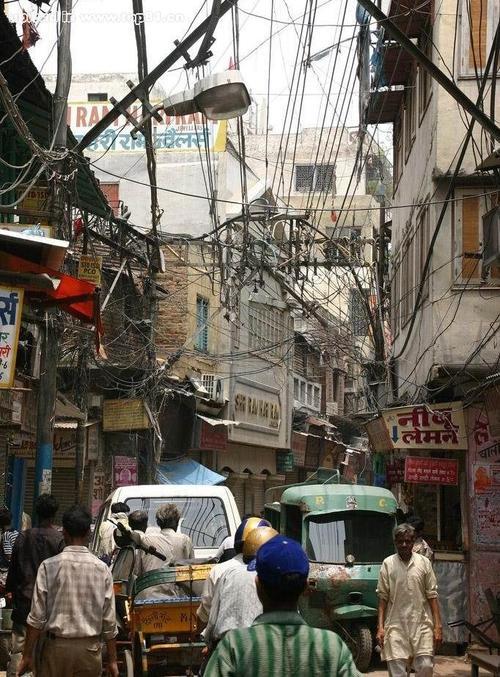
Someone sent me this photo of phone wires as an example of how disorganized India is:

But to me, that’s a great example of the scrappy, opportunistic, self-organizing that I love about India. It reminds me of the movies that portray New York City in the post-depression 1930s.

Everybody seems to be using whatever they’ve got to do what they need to do, which really inspired me in a very purely entrepreneuristic way.

That’s all I have to say for now, but I’m sure I’ll go back again later this year and have an entirely different perspective on it.


23 Responses to “How was India?”

  1. Stephen wrote on May 17th, 2008

    Did I see some goats in that ‘taxi from airport’ video? There must be animal waste everywhere. Is stepping in cow poo the social norm just like their garbage/rubble landscape, or is it just a constant struggle to try to avoid it?

    Very interesting blog/pictures/video. Thanks, Derek!

  2. Tracy E. L. Poured wrote on May 17th, 2008

    Perspective is everything, and one of the beautiful gifts of travel. There’s a lot of different ways to live, intriguingly so. Thanks for sharing, Derek.

  3. Derek wrote on May 17th, 2008

    Stephen - yeah - goats, dogs, and occasional cows. I didn’t notice the poo so it must just be blended in with the other garbage.

  4. David Bruce Hughes wrote on May 17th, 2008

    I went to India 5 different times, never for less than a year and a half, and lived there a total of about 13 years. Judging from your photos and videos, you have only been to India: the former British colony where the natives kicked the colonists out and simply took over their jobs, keeping everything else, including the repressiveness of a colonial regime, exactly the same. You have not been to Bharata, the actual name of the country (check the flag and the money), an ancient, highly advanced civilization that at one time had a huge empire and produced the best knowledge on spiritual life available on the planet.

    Bharata is mostly covered over by India, but you find it sticking out in little odd corners here and there. Indians got in the habit of being sloppy as nonviolent resistance against the colonials, and now it has become part of the culture. Bharata, when you can find it, is surprisingly neat, clean and almost always rural. Go way back up into Rajasthan, or way back into Bengal or Orissa, and you can find it. Big pieces of Bharata still exist in South India; North India has a double layer of cultural covering from the Muslim and then the British occupations.

    The British mounted a long, exceptionally effective disinformation campaign to prove to the English-speaking world that Bharata’s culture was the mythology of a bunch of backward savages. To a large extent, they have succeeded, even in India. They gave Bharata such a bad rep that no one with a standard Western education is motivated to actually study their literature, especially in the original Sanskrit language. Because once you do, there is no going back; it is simply far and away the best philosophy, theology and transcendental science on the planet.

    Anyway I was fortunate enough to have good guidance, so even though I went to India at first, I was fortunate enough to spend quite some time living in Bharata.

    love,
    Baba

  5. Blogger wrote on May 18th, 2008

    An apt description of India. I being an India totally agree with you.

  6. Annick wrote on May 18th, 2008

    Dear Derek, it was so interesting to know “How India was”.
    So different of Europe and I can imagine also from the states (never been in the states). I travelled 6 months true Africa, with only a little bag and no plans, just took every day as it came, floating in this other culture, took the local transport to get my way and it was an extreme “wouah” feeling.
    India should give me that same feeling ! Yes, I would like one day to visit India in the same way, but first I dream to go to Cuba, for the music that I love so much.
    PS. sorry for my english writing which is not excellent !

  7. Atul Rana wrote on May 19th, 2008

    I love it when western visitors go to India and post back thier experiences and try and “sum up” India. Mostly you have it all wrong, I’d say you have it about maybe at best 5% right but other than that you make your judgements on the very little you see and hear…..it’s like me going to NY, LA etc and saying, “well all of America must be like that….”

    You are right in pointing out that there is garbage, chaos and noise in India , because these things *do* exist in modern urban India. But there is a lot more in addition to this…….India lies not in it’s vast urban cities but it lies in it’s vast network of villages (This is a quote by Gandhi who spent months visiting rural India to try and figure out what he was going to fight for and why).

    About 80% of the population of India still lives in it’s villages but those areas are never accessed by any tourists. The rural lifestyle and mindset is quite different. The urban idea in India is a new one and it is still all in a state of development…

    I will stop my rant here I think otherwise I will be here all day, ah well!

    Atul

  8. Derek wrote on May 19th, 2008

    …western visitors go to India and … try and “sum up” India

    Atul, please don’t think I was trying to sum up India. I spent the first paragraph saying this was just a visit to 3 cities, but friends asked for my impressions.

    I’d love to hear your opinion and experience about what writings (whether web or books) you feel capture the spirit of rural India.

  9. Linus wrote on May 19th, 2008

    I was in India and Nepal for six months, back in 1991 - already a whole past era. I’m told that things are very different now, and very much the same.

    I traveled in clumpy steps from Delhi out to Jaisalmer in Rajasthan, down to (then) Bombay, across to the Ajanta and Ellora caves, and up to Varanasi for the transit to Nepal; later we came back for trips to Darjeeling and Sikkim.

    It’s impossible to generalize about That Much Stuff, of course. The experience survives so much time as a series of tiny incidents and moments. I remember the typewriter guys in the bazaar, who would write your letters or handle your documents for a handful of rupees; one day in Delhi an elephant leaned against the cafe where we were having breakfast and no one could get out until it went away; in Hampi a horde of foreigners lived in squalor among temple ruins, and nearby merchants ran generators to light and cool a promenade of disposable restaurants to collect the money that spilled out of the dissolute backpackers.

    I remember trying to get off of a public bus in Delhi, which put our subways and bus lines into stark contrast.

    It’s quite a place, right?

  10. Atul Rana wrote on May 20th, 2008

    I think you have to be careful Derek when you post images like these in isolation as they present a very one sided view of India. I check out a load of my friends’ facebook pictures who visit India and yes they do have images like these but they also have other positive images of India. One of the most common qualms of the Indian people is that western tourists visit India and then post up these sort of images.

    Where do I begin to recommend books on learning about India? It is such a huge country with so many states/religions/languages…it is impossible to sum it up. Since I’ve lived in the UK for so long now I am fascinated at all things Indo-British and as such I took up reading a history book called “Raj” by Lawrence James. It’s a 500 odd page book but he does document the formation of modern India (from 1700 odd - until the British left in 1947) with quite a bit of detail, I guess that is a good start…

    Linus, 1991 was a very long time ago to be in Delhi, you should go again now and try out the Delhi metro, which actually puts the London Underground system to shame….The buses were the main mode of transport in Delhi until 2 years ago and they had to cope somehow with the enormous demand that was placed on them. Once again it is a developing country, which means exactly what it says on the tin.

  11. sathesh k wrote on May 21st, 2008

    Dear sir

    I saw the photos and videos, what you covered is not even 000.01 % You really want to enjoy pls come to tamilnadu I show some place you will not feel like to go to your country again. Bharat means beauty, peace and fun

    thank you

    sathesh k

  12. Robin wrote on May 21st, 2008

    Hi Derek,
    Three blind men holding an elephant, one held the tail, one held the tusk and another held the leg. They could not agree on the description.

    Much of India is gorgeously beautiful and pristine, but you are not likely to find it in the cities.
    There is a big difference between simplicity and city living. Even in America many country people find cities disgusting!

    In your article, you suggest some just pick up the garbage and move it. My first thought was move it to where?

    Next time, take a little trip to the country and you will see differently.

    Best wishes,

    Robin

  13. Margy wrote on May 22nd, 2008

    Hi,

    I have to agree with you impressions. I have been to India twice. First time to Delhi and Agra (the usual tourist spots) and on the same trip to Dehradun and Haridwar. The second trip was to Tezpur and Guwahti. We drove to these cities through the country and it was the same. Tezpur is certainly out in the country yet still has the same piles of trash, rubbish, unsanitary conditions etc. My friends and family wanted to know what it was like so I did my own blog for the India trip…
    http://chaostravel.blogspot.com/2007/12/incredible-india.html

  14. Rev. Dan wrote on May 22nd, 2008

    My first thought was move it to where?

    I thought exactly the same thing… followed by “what, they should take it all indoors?” :)

    This post is resonant with me, in terms of having a big “whoa, this is totally not what I’m used to… why am I responding the way I am to this?” moment. I’ve never been to India, but what Derek is describing here is very similar to my experience in Hong Kong/ Shanghai/ Beijing. I kinda summarized my experience as being “getting a sense of the fact that I’m an ignorant American and the world is incomprehensibly huge and there’s no ‘universally right’ way to live.”

    I’ve never seen traffic like what traffic’s like in Shanghai/Beijing. The seas of bicyclists, the constant honking (at all hours), huge boxes being strapped to ad-hoc carts which look like they might topple at any moment, the whole thing… totally different from in the U.S., where you can be ticketed for not staying between some painted lines, or coming to a complete stop at a stop sign. From what I understand/have heard, traffic in India is a degree of intensity greater than in China. Since I’m a wuss American, that just sounds scary to me. :)

    It looks to me that one of the only folks who seem to have really gotten the point of Derek’s post was Tracy, up there near the top.

    Derek’s not making any judgements about anything other than his own preconceptions… and is bold enough to admit that his thinking was narrow and has thankfully broadened. I think we should be applauding that instead of feeling maligned or defensive because he’s not posting pictures of the beautiful areas of India.

    Derek, you might want to put a “OMFG, I’m NOT Summarizing the Whole of India in a Single Blog Post!!!” disclaimer at the top or something. :)

  15. Atul Rana wrote on May 23rd, 2008

    An image says more than a thousand words…I mean you can put up loads of text around the image, but the first thing people observe are images. And if you selectively put up certain types of images of course you are going to piss people off.

  16. Rev. Dan wrote on May 23rd, 2008

    > if you selectively put up certain types of images of course you are going
    > to piss people off.

    Oh, I see. So Derek’s the fountainhead of some sort of Anti-India Conspiracy?

  17. Isis wrote on May 26th, 2008

    Re: Atul and Rev Dan:
    I think this is a fundamental problem with our generation and online communication. We grew up reading mainstream newspapers with mandates to be balanced and informative, and we now apply the same standards to anything posted online, even a personal blog.

    We need to remember when commenting on blogs: It’s a journal entry with [great] personal insights- It’s not meant to be a white paper.

    I believe the next generation - growing up with online communication - will be much better at understanding these nuances.

  18. Connie wrote on May 30th, 2008

    I certainly enjoyed reading your insights on the rubble in India. “My trouble with rubble” might make some really fun lyrics for a song. I spent some time in Bangladesh and know where you are coming from…a light bulb goes off after wondering…what’s up w’this! I wouldn’t trade the experience for anything except world peace and saving the planet!! :o)

  19. Eddie Clay » Blog Archive » Marketing - not just for music wrote on June 4th, 2008

    [...] difference between sales and marketing. I think of sales like Sever’s observations on India (oh man, another great read, I like this guy, check out the youtube he references, [...]

  20. Eddie Clay wrote on June 5th, 2008

    My wordpress pingback was on by default, sorry, so I’ll make a more relative comment. I agree with Rev. Dan that some are missing the point of the post. Its about relativism. I agree we need to reflect on our concepts of right and wrong…but my problem with this philosophy is that as a Dad of teenagers, faced with sloppy rooms which sometimes rival the pictures above, this “there is no right or wrong” way to live won’t wash with me…and please neighbors, don’t judge my house by the looks of my kids rooms..

  21. Atul Rana wrote on June 6th, 2008

    There’s nothing brave, radical, or unique etc etc about this post. Indian people complain about these problems in India too. Have you been to someone’s home in India? The point is perspective…..describing an elephant from the elephant’s tail perspective (no matter how accurately the tail is described) is still only describing just the tail, still a long, very long way away from understanding what the elephant might look like.

    Delhi as a city is expanding at a ferocious rate, a lot of new pavements and buildings are being made. A lot of these projects are state administered (i.e slow…things get put on hold quite regularly and often people gather and demonstrate against why their area has been left out or put on hold in preference to other areas). Labourers even get killed because of negligence from contractors, labourers that come to the city from their villages in hope of a new life….The story of the development of this city is no different to the development of any city.

    I am drifting now….but the point being, it’s easy to say “I went to India, there was a lot of rubble and garbage and no one seems bothered by it, look look I have photos to show that” and it’s another to actually try and understand why that might be there, what is happening and what do the local people think of it all?

  22. Akbar Muhammad wrote on June 8th, 2008

    After reading your comments about the rubbish everywhere, I looked at the video and didn’t see these sites until near the end. And I only saw one cow and a couple of goats or sheep. During the first part of your ride I was impressed with the cleanliness of the city’s business district, so I suppose it is no different than many of our slum areas in many of our cities. I am very disturbed with any area where there is garbage all over the place as it can promote disease and sickness, so I don’t like it for India or anywhere else in the world. Having said that, just as I do here in our country, I tolerate it because there is not much one can do if the people who live there accepts it. So I move on.

    It is possible that I will never make the journeys you are making right now and I do appreciate your sharing this with us.

  23. priya ramani wrote on August 14th, 2008

    Brothers, brothers…Derek’s India is India too. I don’t understand why we Indians can’t handle visitors who don’t say they were “transformed” by India. This country is dirty. It’s clean too. Get over it.
    Nice post Derek. The husband and me travelled round the world recently and one thing we noticed was that irrespective of whether the cities we drifted through were richer or poorer than Bombay, they were, almost always, cleaner.
    Maybe there’s a business opportunity in all this rubble. I’m thinking hard…

Leave a Reply


Derek Sivers